setting the table
on passover, and taking care

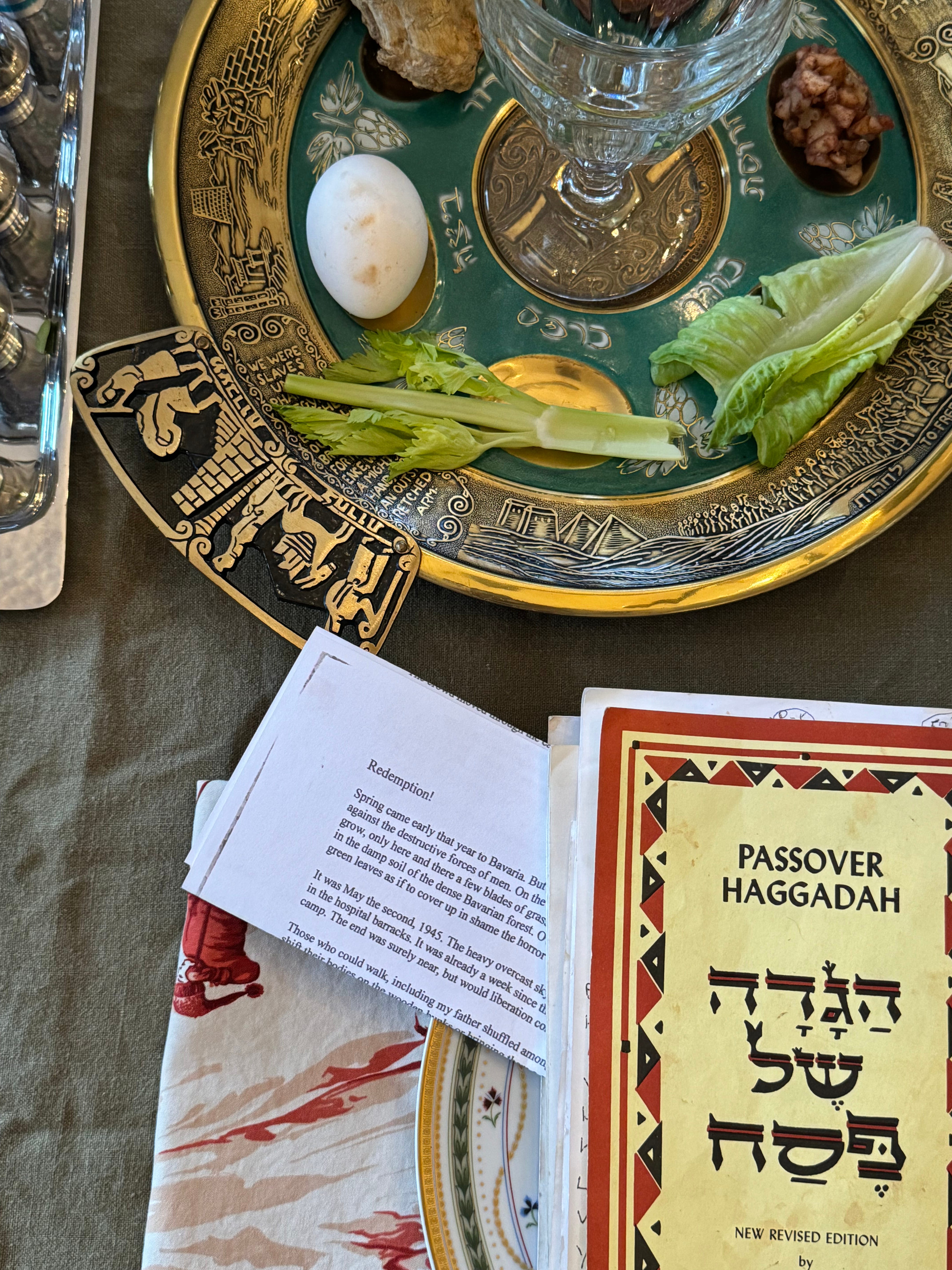
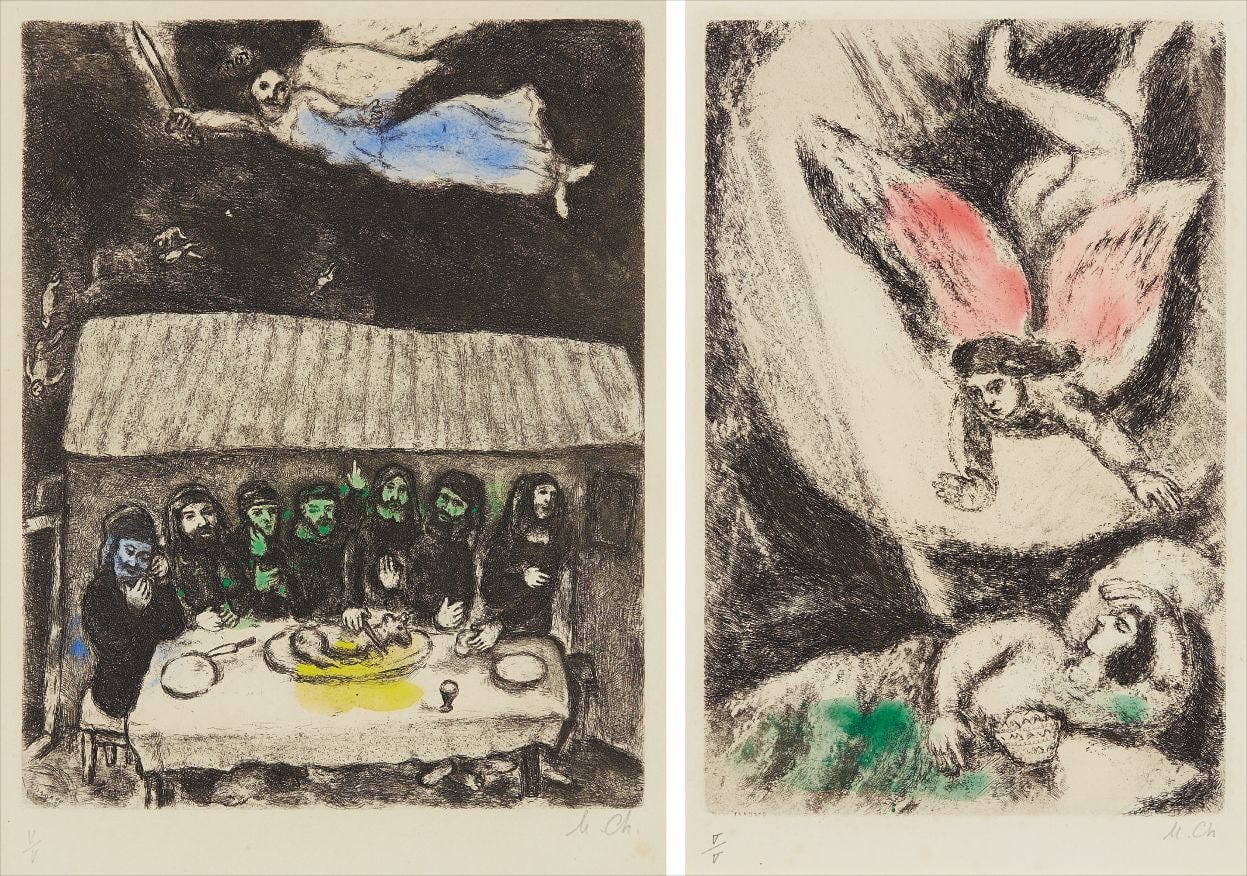
Last night marked the beginning of Passover, or pesach as we call it in Hebrew. Jews around the world gathered around tables and read from the haggadah; leaning to the side and drinking four glasses of wine, leaving a chalice filled to the brim for Eliyahu HaNavi (Elijah the Prophet; he’s a ghost and you have to let him in) and ceremoniously spilling drops of wine on our plates to recount the ten plagues and mourn what they wrought. Some of us celebrated in relative comfort, though these days, sadly, even having a mezuzah on the door is cause for some level of wariness. Others celebrated in between running to bomb shelters—at our seder table, someone got a text near the end that their wife was in a bomb shelter yet again, at 3AM in Jerusalem. Some, even this year, will celebrate in secret. But we will all celebrate the first seder in years where no seat has to remain empty, where finally, finally, we will be able to say that we are all free, that none of us are hostages any longer.
Last night we told the story of our freedom from slavery; a story of survival, 3,000 years in the making. I am reminded yet again how lucky I am to be a part of traditions like these, of a people like this. Despite the sadness, the trauma of generations carved into our bones and the more recent pain that is still like an open wound on our skin, I would not change it for the world. Even as I write this, a notification flashing in another tab that a missile has struck Petah Tikva, and a photo of a daycare hit by a rocket in Nahariya, I am thankful. Thankful and lucky, and honoured to be a small part of this ancient magic that has continued to survive throughout it all.

Setting the table today for the second seder, I flipped through the Haggadah that my 100 year-old Zadie has used every year for as long as I can remember. His notes are scattered across the pages, with extra words printed and tucked into the worn folds of the book. Wine stains on the cover and matzah crumbs stuck in the spine. Here is what he said the first year of Covid, when our seder was done over zoom. Here is what he said the first seder after October 7th, 2023—the day the world changed forever. Last night I watched with pride as he whispered with my cousin’s small kids about the afikoman. I ran my hands along the prayers and lingered at the side of the table before heading back to the kitchen to get cutlery.
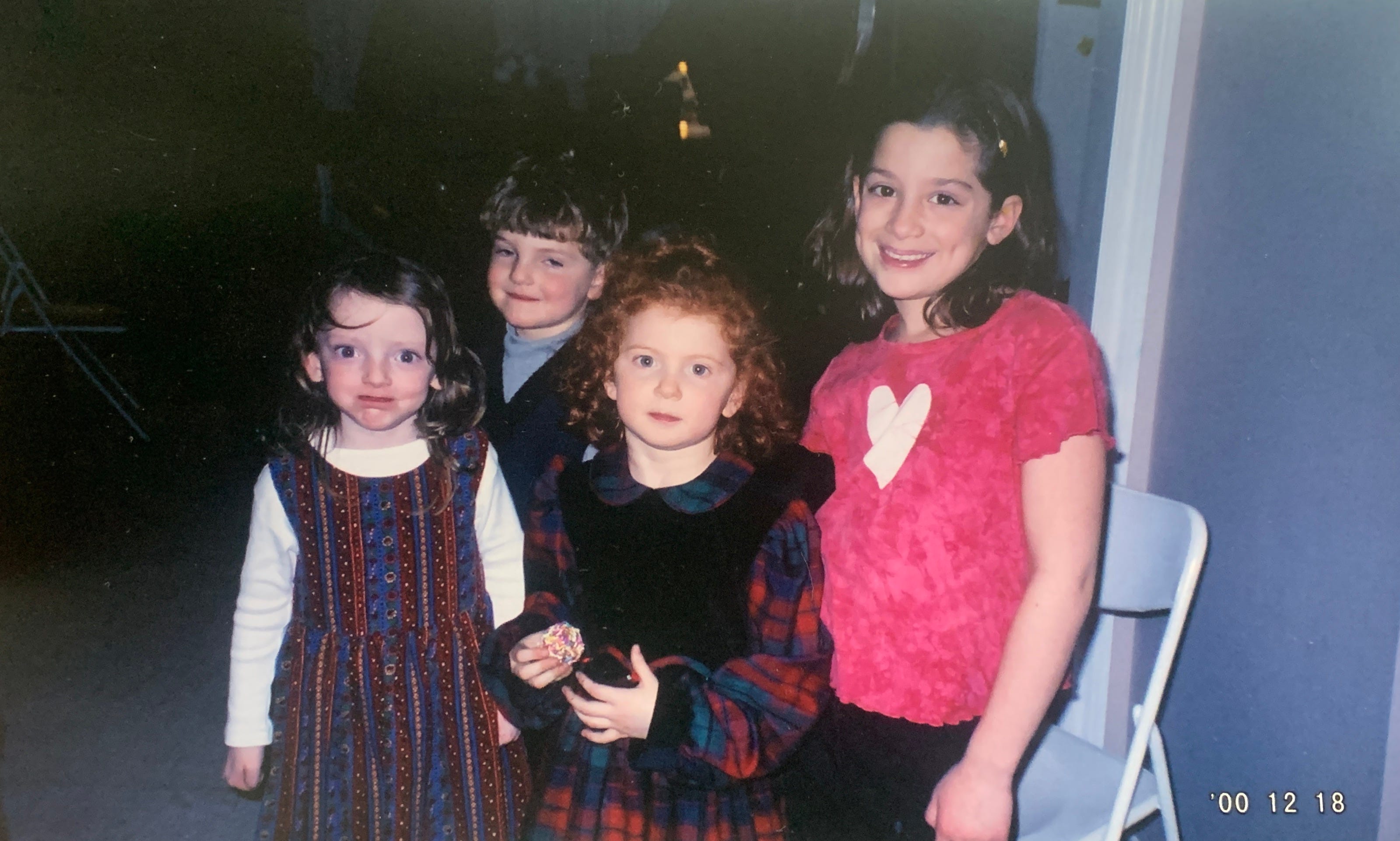
I grew up helping to set the dinner table. At home, I adored opening the old wooden cabinet and combing through various placemats to pick out my favourites. I had favourite forks and spoons and I would place each element carefully, stepping back every so often to admire my handiwork. My parents’ dining room table is beautiful; old wood with a hand painted sun in the centre. I am one of five kids, so instead of chairs on one side of the table we had an old church pew, painted to match the design on the table, that we would slide into every night. We all came together around that table, each day, and I took pride whenever I would help set it all up—a sense that has stayed with me through the years. When I was a kid and we went to my Bubie and Zadie’s house each Friday for shabbat dinner (as we often still do), I loved being in the kitchen to help serve. I’d slide my socks on the linoleum floor and wait for my Bubie to ladle matzo balls into a bowl for me to carry back to the table. My mother and aunts would be in there too, and getting glimpses of what happened in the kitchen while everyone else sat at the table is a big part of what has fuelled my love of cooking to this day. I am no stranger to the stereotype of women working in the kitchen while the men get to sit around laughing and relaxing, but instead of feeling oppressed in this way, at least with my family, I always felt lucky. They’re missing out, I would think as I passed through a veil between worlds that shimmered in the doorway of my Bubie’s kitchen. The discussions around the table would fade away and I would see my Bubie smiling, my mum throwing her head back with laughter and my aunt laughing along with her. They would talk in between ferrying bowls of liquid gold to and fro, and those moments felt every bit as nourishing as the food itself. Even last night, when my aunt stood over the candles and called out to all the girls and women to help her, I felt a swell of pride as I waved my hands in front of my eyes. My cousin’s youngest daughter sat across from me, and her eyes met mine, wide with curiosity. I grinned back at her and so quickly, she giggled with delight and moved her hands in front of her eyes to mimic my own. This is where the magic is, and this is how it passes down, from generation to generation.
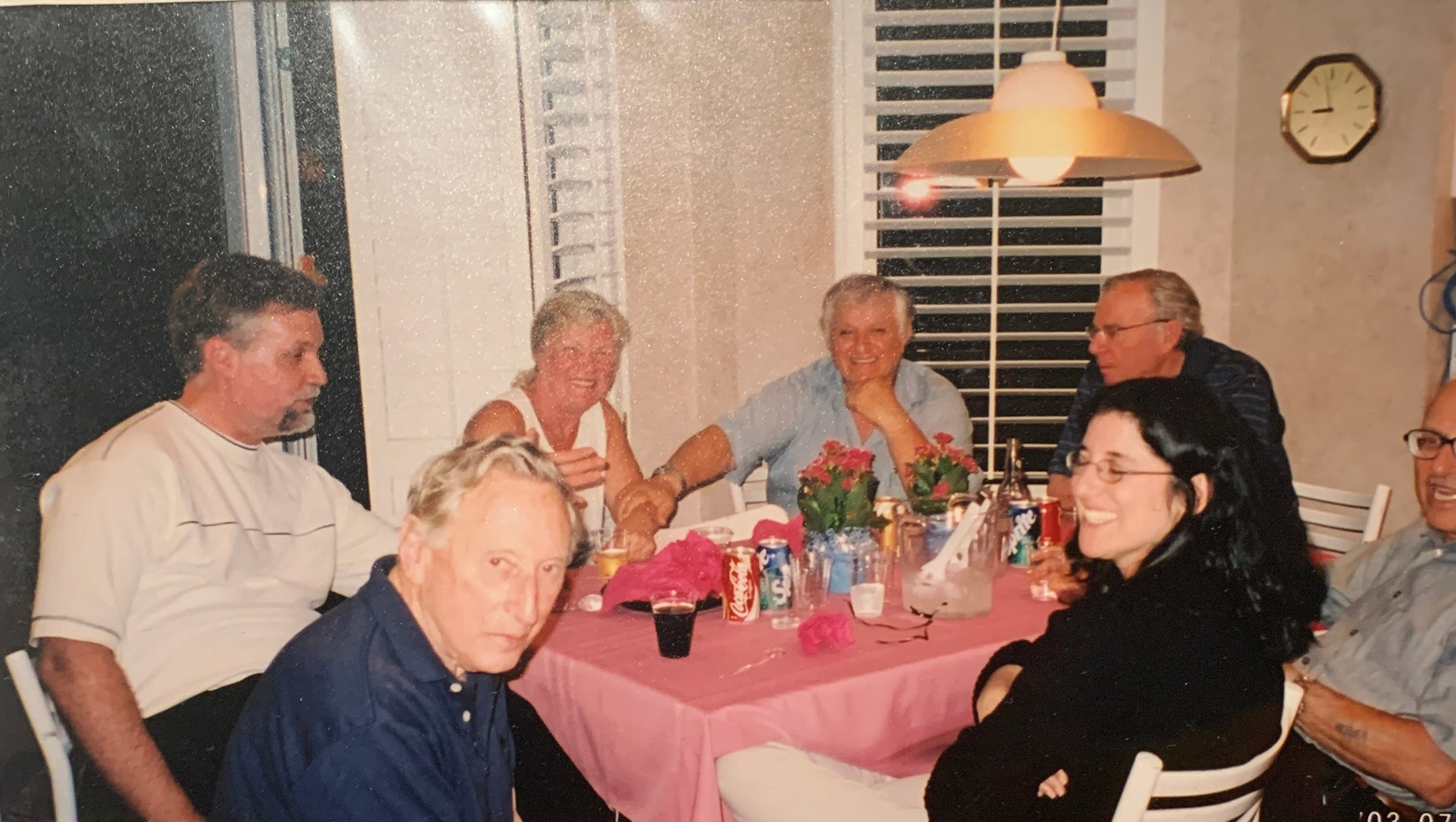
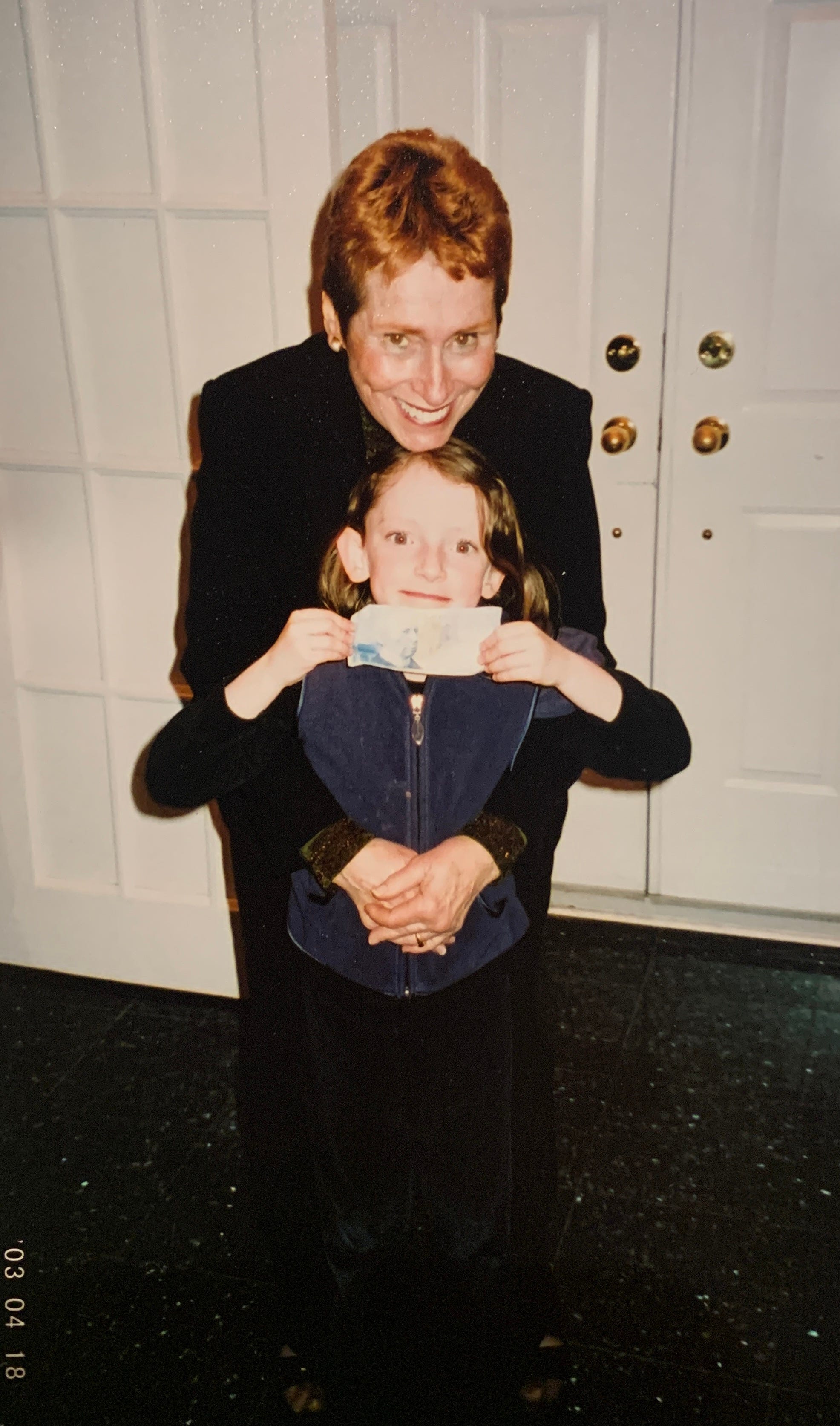
Without fail after each shabbat dinner my Zadie tasks me with getting the small crumb sweeper and doing a once over on the table, clearing it of any errant challah bits, sesame seeds, and the like. I remember that I used to get annoyed, especially if it interrupted a conversation or video game challenge amongst cousins. However, I soon found it meditative. The sweeping motion, making sure the tablecloth was as clean as could be. And it meant so much to him that I did it, and took the time, so how could it not become important to me too? I think we’ve strayed so far from the mindset of it takes a village. Maybe we’re swinging back around to it now, and I hope we are, because taking time for the people you love, putting in the extra effort even if is inconvenient — that’s what all of this is about, in the end. Growing up Jewish, that was always drilled into my head. How vital community is, how we look out for each other and take care. How important it is to check for every last crumb.
Today has been an all day in the kitchen kind of day. Right now, the soup is simmering, the turkey is in the oven, carrots are roasting, meatballs simmering in a spiced sumac sauce are filling the air with their scent, and the seder plate is arranged on the table. My mum and I are in the kitchen, dancing to our favourite songs and preparing dishes and cleaning. It is a lot of work, there is no doubt about that. But it is work I am happy to do. To me, it means comfort, and family, and love. In my parent’s old kitchen there was a small, square tv on a credenza at one end of the room. There was a folding stepladder I would sit on, right next to the radiator and a window looking to our neighbour’s yard and the street heading north. The TV had cable and a VHS player, and would crackle with images of cartoons or CP24 News. I loved sitting on that uncomfortable stepladder while my parents cooked, and especially when my mum’s best friend would come to stay with us. My mum and Lorna would put The Young and the Restless on and bake pies and cook dinner — I would contort my body around the stepladder to watch them move and laugh, rolling dough and simmering broths. I remember baking banana bread or chocolate chip cookies with my mum, fastidiously running my tiny finger over the ingredient lists. Are you sure this is firmly packed? I’d ask her, pointing to the cup of dark brown sugar.
So, as I finish setting the table for tonight’s seder, I am looking forward to each and every reading. Yes, even though we just read through it last night, and yes, even if it means it takes a little longer to get to dinner. Each and every time we sit down together as a family, I just want to linger in it. The togetherness, the love, the magic of it all.
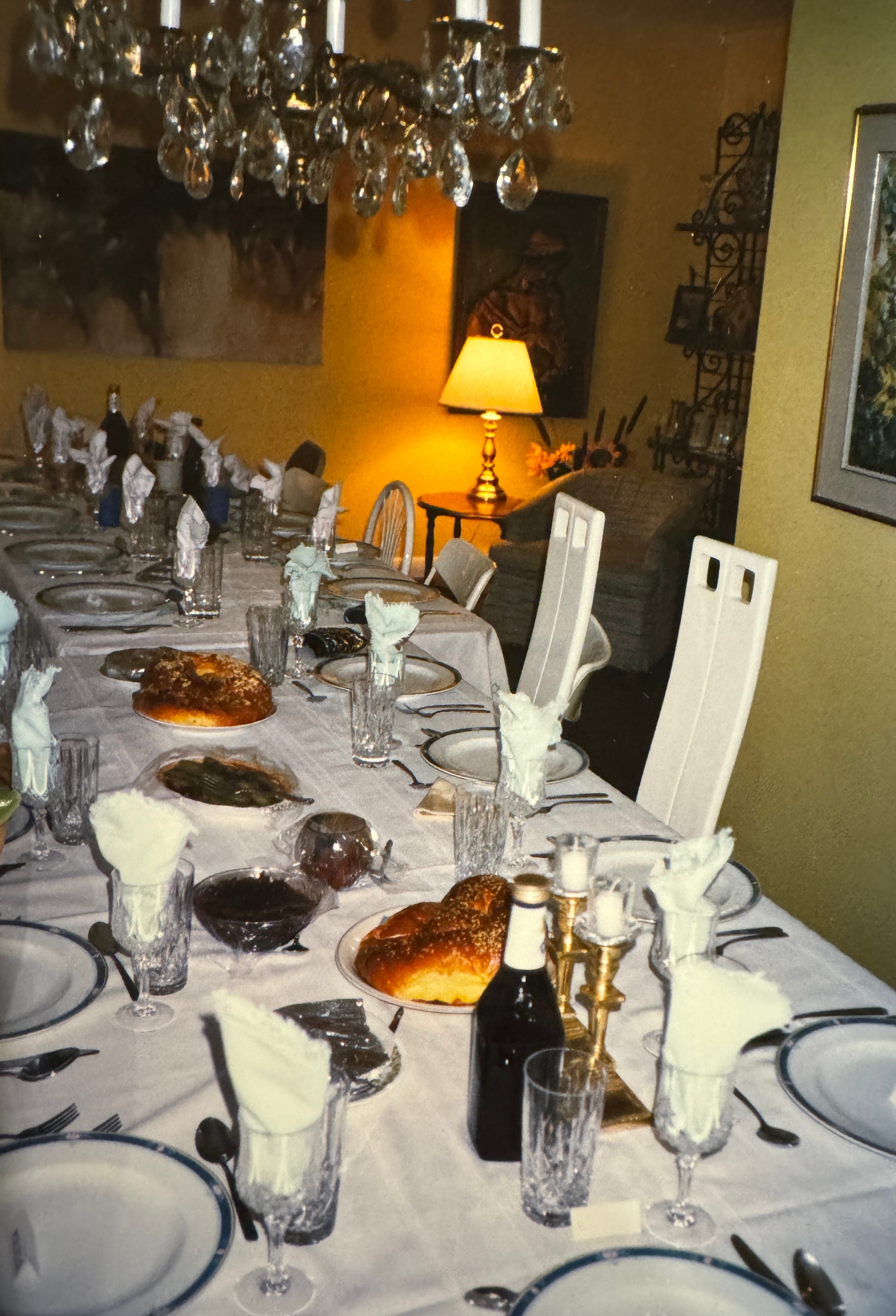
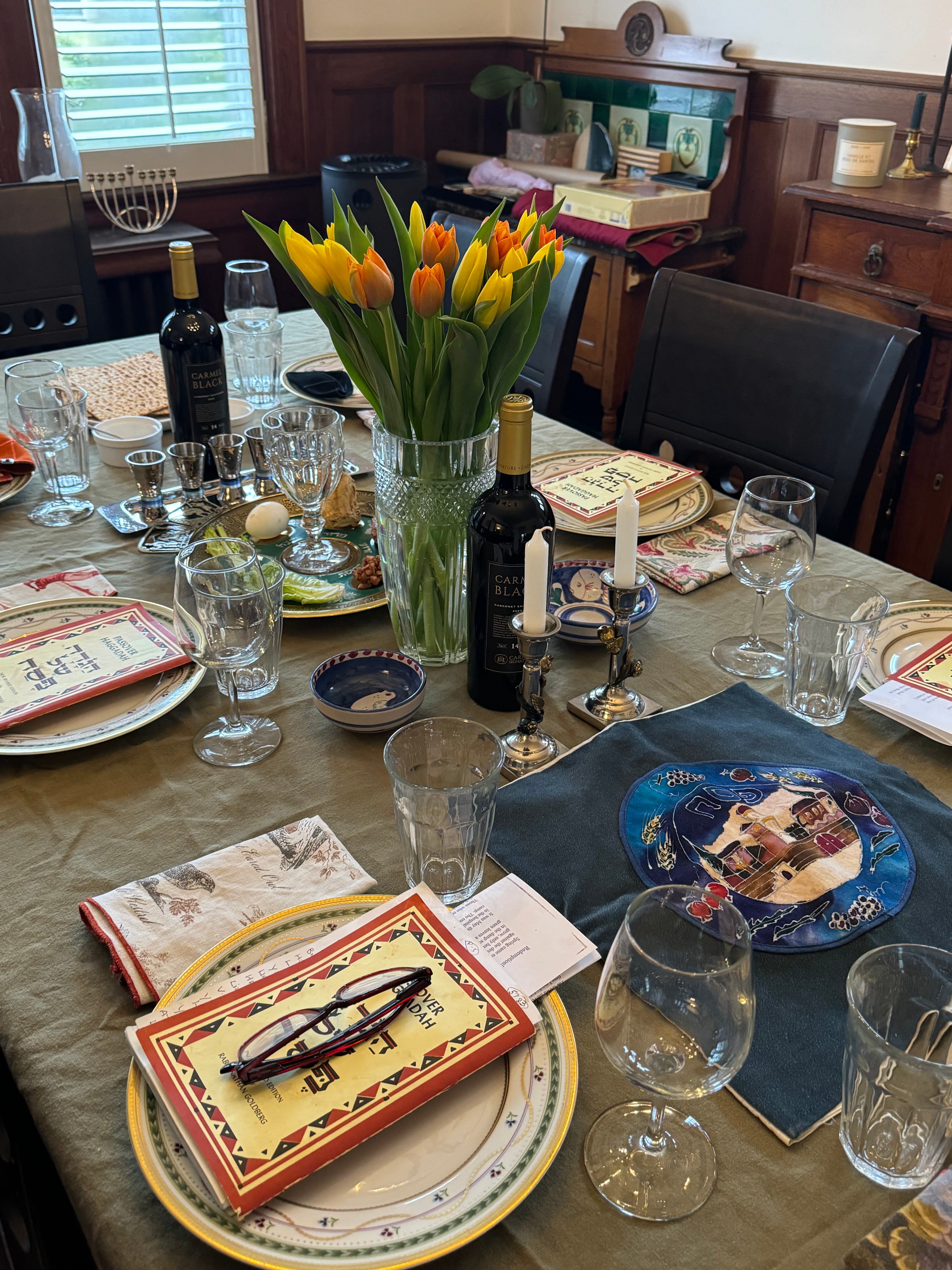
Chag pesach Sameach to everyone who celebrates, and thanks for reading. I’m glad you’re here.
h
What I’ve been reading, listening to, and looking at:
How can I write about Passover and NOT put Leonard Cohen at the end? Here he is singing Born in Chains in Florence, Italy in 2010.